Introduction
Bob haircuts for thin hair round face shapes need to accomplish two things beautifully: create the appearance of fuller strands while adding flattering structure around softer facial proportions. Strategic length, strong ends, gentle crown lift, and carefully positioned layers can make thin hair look more substantial without introducing excessive width around the cheeks.
The versatility of the bob makes achieving that balance much easier. Longer front pieces can visually lengthen the face, while blunt perimeters preserve valuable density. Side parts, loose waves, and lightweight texture provide additional dimension. These 13 bob ideas combine volume-enhancing techniques with face-framing shapes designed specifically for women balancing thin hair and naturally round facial features.
The Enduring Strength of Volume-Enhancing Bobs
Bobs continue working beautifully for thin hair because shorter lengths reduce the weight that often causes delicate strands to lie flat. Stronger perimeters make sparse ends appear denser, while subtle graduation or controlled crown layers can introduce natural lift. These elements can be customized without dramatically changing the haircut.
Round faces benefit from that same adaptability. Longer front sections, diagonal partings, and vertically directed movement can create definition without hiding natural facial softness. Because the bob accommodates both volume and strategic framing, it remains a practical hairstyle rather than a passing trend.
Angled Blunt Bob
An angled blunt bob combines a dense perimeter with longer front pieces that visually extend a round face. Keeping the ends largely one length preserves valuable thickness, while gentle graduation toward the front creates definition without relying on numerous layers.

For maximum fullness, blow-dry the roots with slight elevation before smoothing the lengths downward. Keep the sides controlled rather than overly rounded near the cheeks. A subtle off-center part adds asymmetry, allowing this structured bob to create both visual density and flattering facial length.
Long Bob With Full Ends
Extra length below the jaw creates vertical lines that can make a round face appear more elongated and defined. Maintaining a strong, minimally layered perimeter prevents thin ends from looking sparse, giving the entire long bob a noticeably fuller appearance.

During styling, lift the roots gently while keeping the mid-lengths relatively smooth. Broad bends below the cheekbones can add dimension without creating unnecessary side volume. This practical lob also leaves enough length for occasional updos, making it especially useful for women wanting versatility alongside fuller-looking hair.
Side-Parted Volume Bob
A deeper side part creates immediate root lift by shifting thin strands away from their usual direction. The resulting asymmetry also introduces a diagonal line across a round face, helping the hairstyle appear more dynamic and visually elongated.

Establish the part while the hair remains damp, then blow-dry the heavier section upward before directing it sideways. Keep the ends substantial with minimal layering to protect density. This simple approach provides noticeable movement and fullness without requiring an elaborate haircut or complicated everyday styling routine.
Textured Lob With Soft Waves
A textured lob uses broad, relaxed waves to create dimension without sacrificing the vertical lines that complement a round face. Keeping the bends beneath the cheekbones avoids excessive width, while minimally layered ends help thin hair maintain a stronger appearance.

Create loose alternating waves and leave several ends relatively straight for a contemporary finish. Gently separate the texture with your fingers instead of brushing everything outward. Lightweight texture spray can provide grip, but using too much may weigh down delicate strands and reduce valuable root movement.
Asymmetrical Bob With Dense Ends
Uneven side lengths introduce strong diagonal movement, creating visual contrast against the balanced curves of a round face. A dense perimeter makes thin hair appear more substantial, while the longer section naturally draws attention downward toward the jaw and neckline.

Keep the haircut relatively smooth so its asymmetrical structure remains clearly visible. Slight root elevation around the deeper side of the part can provide additional body without widening the cheeks. This contemporary bob creates personality and definition while preserving the thickness that fine, delicate strands often need.
Inverted Bob With Crown Lift
An inverted bob combines gentle graduation behind with longer sections toward the face, providing natural dimension for thin hair. Crown elevation introduces flattering height, while extended front pieces create downward lines that complement softer round facial proportions without emphasizing cheek width.

Blow-dry the back sections away from the scalp to reinforce their lift, then keep the front relatively smooth. Avoid excessive thinning throughout the ends because preserving density supports a stronger silhouette. The finished bob feels polished, structured, and noticeably fuller without requiring dramatic daily styling.
Layered Bob With Side Bangs
Long, restrained layers can create movement through thin hair while preserving enough weight around the perimeter. Side bangs sweep diagonally across the forehead, introducing flattering asymmetry and directing attention away from the widest portion of a round face.

Style the fringe sideways with gentle root lift rather than curling it heavily toward the cheek. Keep the remaining layers softly separated and avoid aggressive feathering through the ends. This balanced combination adds movement and facial definition while allowing delicate strands to maintain a convincingly fuller appearance.
Sleek Collarbone Bob
A collarbone bob provides enough length to create strong vertical framing without allowing thin strands to become excessively weighed down. Keeping the perimeter relatively blunt adds visual density, while smooth sides produce a streamlined silhouette around fuller cheeks.

Lift the roots slightly before smoothing the lengths downward with a brush. A center or subtly off-center part can emphasize the clean shape depending on your natural hairline. Avoid heavy finishing oils near the roots, allowing the haircut to retain movement while maintaining its polished, sophisticated character.
Choppy Bob With Crown Texture
Carefully placed choppy layers can create useful crown dimension when thin hair needs additional movement. Keeping the sides relatively controlled prevents excessive width around a round face, while a substantial lower perimeter ensures the ends do not appear unnecessarily sparse.

Apply lightweight volumizing mousse near the roots before drying, then separate selected crown pieces with your fingertips. Avoid extending aggressive layers throughout every section because too much removal can reduce density. The finished bob feels playful and modern while maintaining a balanced, fuller-looking silhouette.
Wavy Bob With Side-Swept Fringe
Soft waves create visual fullness through thin hair, while a side-swept fringe introduces diagonal movement across a round face. Beginning the waves below the cheekbones helps maintain facial length, preventing the textured hairstyle from becoming overly wide through the sides.
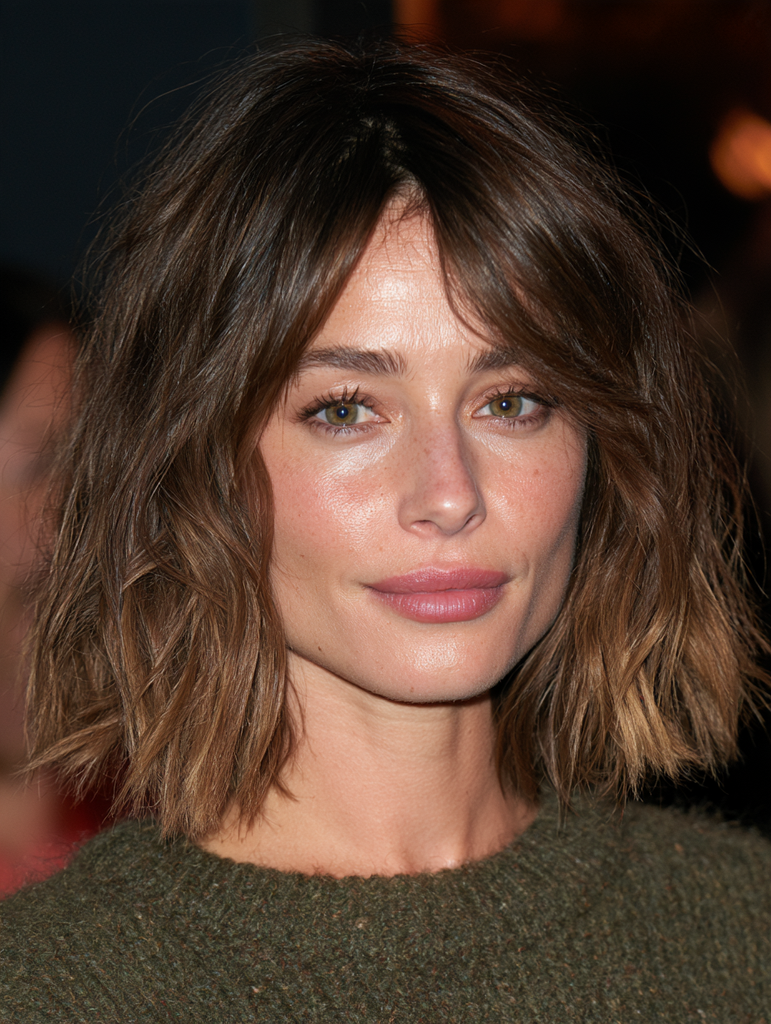
Direct the fringe sideways during blow-drying, then form broad bends through the lower lengths. Leaving several ends straight can keep the overall silhouette contemporary and elongated. A small amount of lightweight styling spray helps preserve movement without making delicate strands stiff or noticeably weighed down.
Graduated Bob With Subtle Layers
Gentle graduation can provide thin hair with natural lift while maintaining enough length around the front for flattering facial framing. Subtle layers prevent excessive bulk through the back, yet a strong perimeter preserves the visual density needed by finer strands.
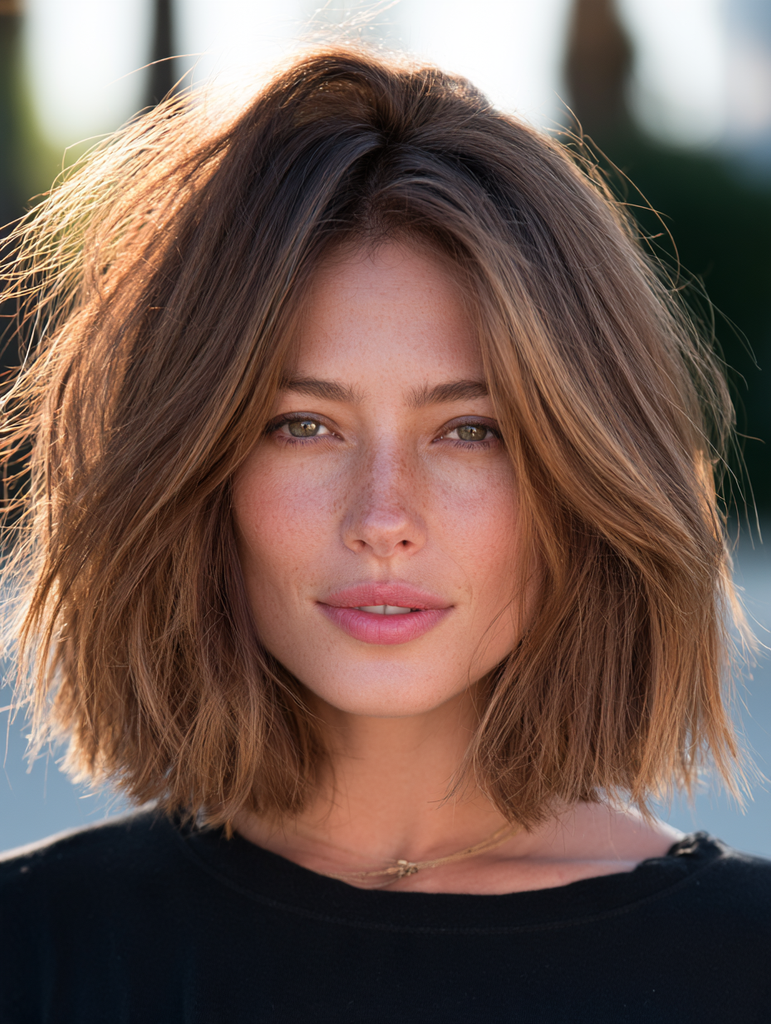
Use a round brush to elevate the roots around the crown while directing longer front sections downward. Keeping the sides smooth helps prevent additional width around rounded cheeks. This refined bob offers structure and movement without depending on aggressive layering, making everyday styling comparatively straightforward.
Shoulder-Grazing Bob With Face-Framing Pieces
A shoulder-grazing bob creates extended vertical lines that can beautifully complement a round face while offering extra styling flexibility. Delicate face-framing pieces beginning below the cheekbones introduce movement, while the remaining perimeter stays relatively full to support thin hair.
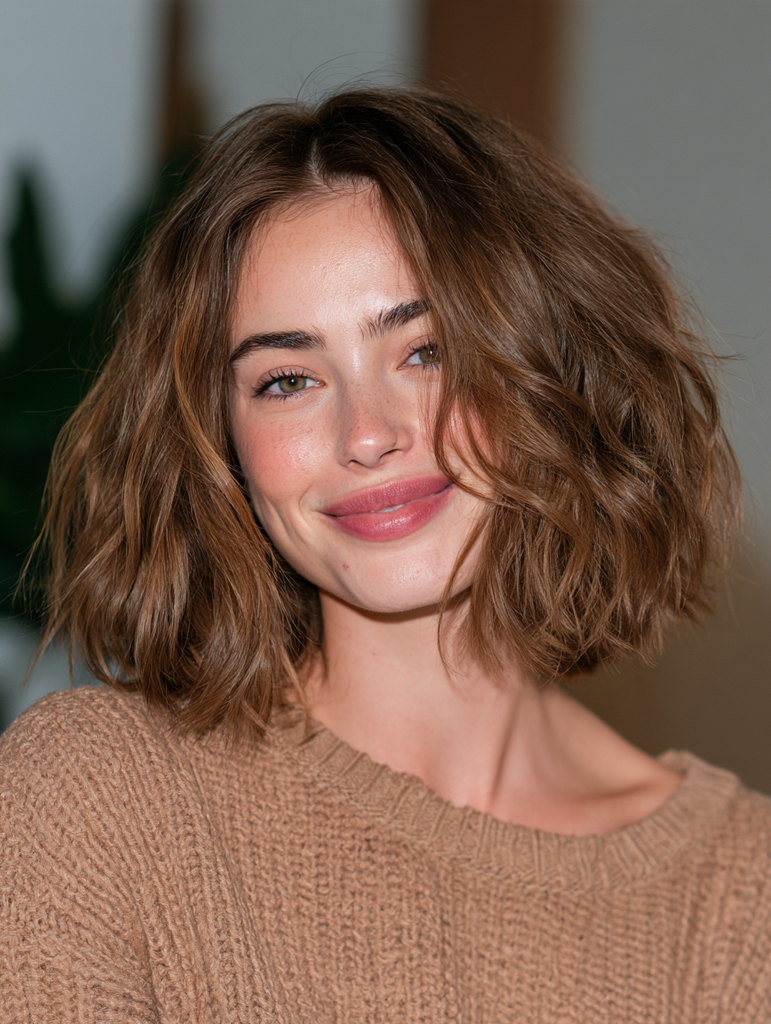
Add gentle root elevation before styling the front pieces slightly away from the face. Keep waves broad and concentrated toward the lower lengths when additional texture is desired. This longer bob provides flattering definition without sacrificing the density that helps delicate strands appear healthier and more substantial.
How to Style Bob Haircuts for Thin Hair Round Face Shapes
Start by creating controlled root lift, particularly around the crown, where additional height can complement round facial proportions. Keep excessive volume away from the widest cheek area, and use longer front sections or diagonal partings to establish visual length. Broad waves should generally begin below the cheekbones when maintaining a streamlined silhouette is the goal.
Thin hair benefits from lightweight mousse, root-lifting products, and restrained amounts of texture spray. Heavy oils or dense creams can quickly reduce volume. Preserve fullness through strong ends and moderate layering, then maintain the haircut with regular trims so delicate strands continue appearing substantial.
Final Thoughts
Bob haircuts for thin hair round face shapes can successfully combine fuller-looking density with flattering facial definition. Strong perimeters, crown elevation, longer front sections, strategic asymmetry, and carefully positioned texture all influence how substantial and balanced the finished haircut appears.
Choosing the best variation depends on your natural density, texture, and preferred maintenance routine. Whether you favor a sleek collarbone bob, softly stacked shape, or textured lob, avoid unnecessary bulk removal. Thoughtful shaping can help thin strands appear livelier while allowing a round face to remain naturally soft and beautifully framed.
