Introduction
The best haircuts for women over 60 with thin hair focus on preserving visible density while introducing enough movement to prevent strands from looking flat. Strong perimeters, controlled crown layers, softly graduated sections, and strategic fringe can create the appearance of greater fullness without removing valuable weight from already delicate hair.
Length also matters, but going extremely short is not the only solution. Chin-length bobs, airy bixies, collarbone cuts, and softly structured pixies can all work beautifully when tailored to individual density and texture. These 13 haircut ideas offer varied ways to create body, shape, and practical everyday styling while keeping thin hair looking naturally substantial.
The Density-Preserving Details That Give These Cuts Longevity
Haircuts for thin hair remain useful when their structure supports fullness instead of relying on temporary styling tricks. A strong baseline can make the ends appear denser, while selective elevation through the crown creates movement. Keeping layering controlled prevents thinner strands from becoming unnecessarily fragmented.
These principles also allow plenty of personalization. Bangs can soften the front, side parts can shift volume, and longer sections provide styling flexibility. As hair changes, the underlying shape can be adjusted gradually without abandoning the entire haircut, giving these silhouettes dependable long-term versatility.
Polished Blunt Bob
A blunt bob keeps the lower perimeter relatively solid, helping thin hair appear more substantial around the ends. Finishing near the chin or slightly below provides enough length for movement without allowing delicate strands to become excessively weighed down.

Keep layering minimal and concentrate styling around the roots when extra volume is desired. A gentle inward bend through the ends reinforces the clean baseline without requiring elaborate heat styling. This straightforward structure provides a polished silhouette while preserving valuable density, making it especially practical for naturally straight or softly wavy hair.
Crown-Lift Pixie
A crown-lift pixie preserves additional length through the upper sections while keeping the sides and neckline softly controlled. Carefully positioned shorter layers encourage elevation without removing excessive density, giving thin hair a more dimensional appearance from multiple angles.

Apply lightweight mousse or root spray before drying the crown upward with your fingers. Sweep the front sideways for softness rather than creating rigid height. Keeping styling products light allows individual strands to remain mobile, resulting in a pixie that feels airy and full instead of separated or heavily coated.
Graduated Bob With Full Ends
Gentle graduation through the back can establish shape while maintaining a substantial perimeter around the sides and front. The controlled elevation creates subtle crown support, making thin hair appear more structured without requiring numerous short layers throughout the haircut.

Use a small round brush to lift the back slightly and curve the ends softly inward. Avoid excessive texturizing because maintaining visual weight is central to this style. The finished bob offers a balanced combination of fullness and movement while remaining refined enough for both everyday routines and more polished occasions.
Side-Swept Bixie Cut
A bixie blends pixie-inspired shortness with slightly longer sections around the front and temples. A side-swept finish shifts thin hair diagonally across the crown, creating movement while keeping enough length to maintain softness around the face.

Use lightweight volumizing product and direct the roots toward the opposite side of their natural fall for extra lift. Tuck the shorter section behind one ear when desired. This adaptable shape offers more styling freedom than a very short crop while remaining considerably easier to manage than longer layered hairstyles.
Chin-Length Bob With Side Bangs
A chin-length bob creates a compact silhouette that can help delicate strands retain visible fullness. Longer side bangs introduce movement around the forehead while blending smoothly into the stronger perimeter, avoiding the density loss that can accompany heavily layered fringe.

Direct the bangs sideways with a small brush and keep the remaining hair relatively smooth. Gentle root lift can provide enough volume without disturbing the clean outline. This balanced combination offers face-framing softness while maintaining the substantial ends that often complement thinner hair particularly well.
Feathered Short Crop
A softly feathered crop introduces controlled movement through the crown while maintaining a neat, compact silhouette around the sides. Longer feathered sections can create visual dimension without relying on extreme layering that might leave thin hair looking overly wispy.

Use your fingers to direct the upper pieces away from the face while drying. A small amount of flexible styling cream can provide separation without flattening the roots. Keeping the feathering soft rather than dramatically piecey creates an airy haircut that feels lively while remaining manageable for straightforward everyday routines.
Rounded French Bob
A rounded French bob combines a compact length with gentle curvature, creating a softly structured silhouette around the jaw. Maintaining a strong perimeter helps thin hair retain visual substance, while restrained internal shaping prevents the haircut from looking overly rigid.

Blow-dry the ends inward with a small round brush while providing modest elevation at the roots. A light fringe can be added when enough density is available. This refined bob works particularly well when you want shorter hair with noticeable shape but prefer to avoid heavily textured or dramatically layered finishes.
Collarbone Cut With Dense Ends
A collarbone haircut preserves enough length for ponytails and simple updos while keeping the perimeter relatively strong. Minimal layering helps thin strands remain visually connected, preventing the ends from becoming overly transparent or fragmented as they fall around the shoulders.

Add broad bends through the middle lengths when extra movement is desired, or wear the cut straighter for a cleaner silhouette. A side or center part can change the overall appearance quickly. This versatile length offers styling flexibility while requiring less commitment than either a very short crop or longer hairstyle.
Soft Stacked Bob
A softly stacked bob uses controlled graduation through the back to create gentle lift without dramatically thinning the lower sections. Keeping the stacking subtle preserves a smooth outer silhouette while providing enough structure to make the crown appear naturally elevated.

Style with a small round brush and concentrate volume near the roots rather than aggressively curling the ends. Longer front pieces maintain useful visual weight around the face. This measured approach offers the shape associated with stacked bobs while remaining suitable for thin hair that benefits from restrained rather than excessive layering.
Wispy Pixie With Long Fringe
A wispy pixie keeps the sides compact while preserving longer pieces through the crown and fringe. The additional front length provides styling flexibility, while light texturing creates movement without requiring large amounts of hair to achieve a noticeable shape.

Sweep the fringe diagonally and lift selected crown sections using your fingers. Avoid applying heavy wax across the entire haircut because delicate strands can quickly separate and appear flatter. A lightweight finishing product provides enough definition while maintaining the soft, airy character that makes this pixie especially wearable.
Wavy Bob With Minimal Layers
Soft waves can create natural dimension through a bob without requiring extensive layering. Maintaining a stronger perimeter preserves fullness, while a few restrained internal layers can help the waves develop movement without reducing too much density around the ends.

Apply lightweight mousse and encourage broad bends rather than tightly separated curls. Natural wave patterns can also be air-dried for an easier routine. The combination of texture and substantial ends creates visual depth, making this bob an appealing option when thin hair already has some natural movement or gentle waviness.
Short Bob With Bottleneck Bangs
Bottleneck bangs remain shorter through the center before gradually lengthening toward the sides, creating an open frame around the face. When kept light and carefully blended, they can complement a short bob without removing excessive density from the main haircut.
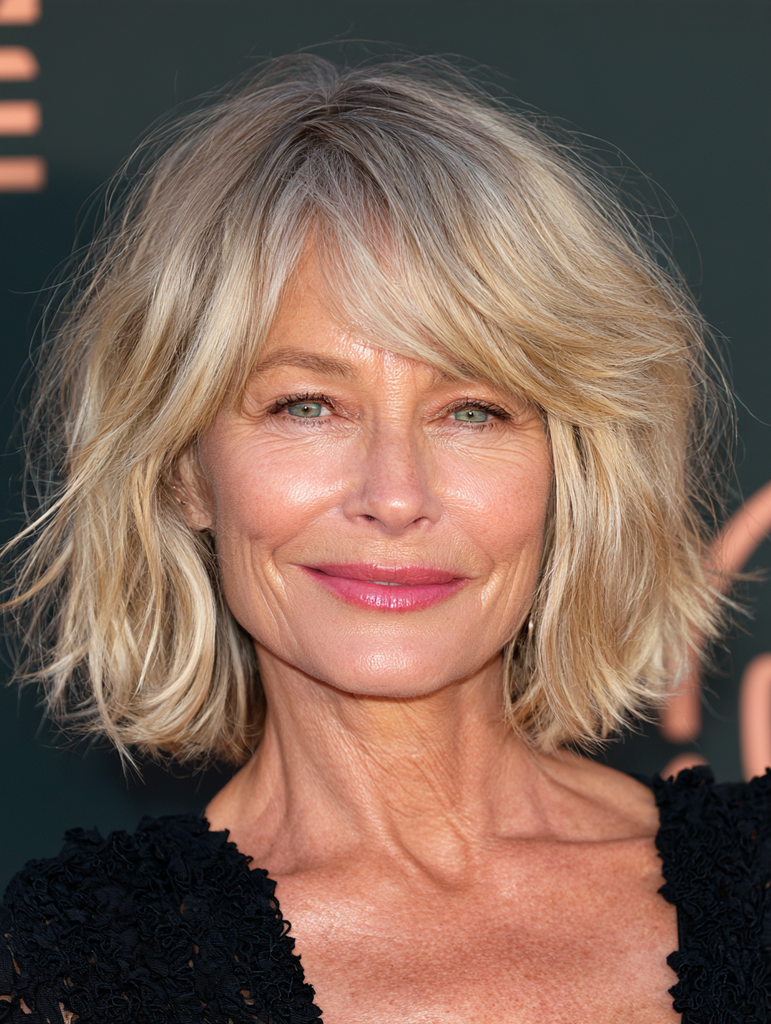
Shape the fringe gently away from the center and maintain a relatively solid perimeter through the bob. Keep crown layering restrained so fullness remains concentrated where it contributes most. This combination introduces contemporary face framing while preserving the clean structure that helps thinner hair look more substantial.
Sleek Pixie Bob With Side Part
A pixie bob maintains short-hair convenience while providing additional length around the front, ears, and upper sides. A defined side part redistributes volume naturally, allowing the heavier section to create movement without requiring extensive crown layering.
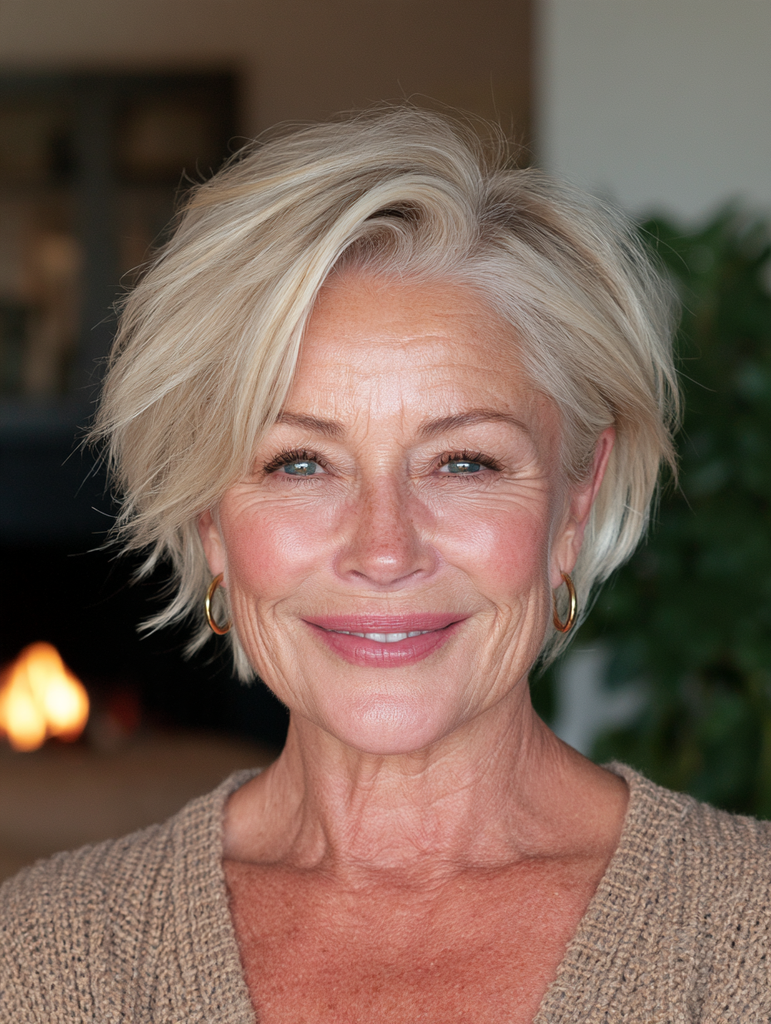
Blow-dry the roots with gentle elevation before directing the longer sections sideways. Keep the surface smooth but avoid flattening it completely against the scalp. The result is a refined, versatile haircut that can appear polished with minimal styling while maintaining enough length to prevent thin strands from looking excessively sparse.
How to Style Haircuts for Women Over 60 With Thin Hair
Begin with lightweight products designed to provide support without coating individual strands heavily. Root-lifting spray, volumizing mousse, or flexible styling foam can create useful elevation. Concentrate these products near areas that need support instead of distributing large amounts through the entire haircut.
Drying technique can also influence fullness. Direct roots away from their natural position before allowing them to settle, and avoid repeatedly applying heavy oils near the scalp. When using heat, focus on creating strategic lift and broad movement rather than numerous tight curls. Preserving connection between strands generally produces a fuller-looking finish.
Final Thoughts
Haircuts for women over 60 with thin hair can range from compact pixies and structured bobs to versatile collarbone styles. The strongest options preserve density where it matters while using carefully positioned layers, graduation, fringe, or parting to create movement and shape.
There is no single haircut every woman needs after 60. Natural texture, actual density, growth patterns, maintenance preferences, and personal style are more useful considerations. Choosing a shape that protects valuable fullness while remaining easy to style can make thin hair look noticeably more balanced, lively, and beautifully defined.
