Introduction
Shaggy bob hairstyles for thick hair over 60 combine the structure of a classic bob with the lighter movement of carefully placed shag layers. Thick hair naturally provides generous body, but too much weight around the sides and ends can make shorter cuts feel heavy. Strategic layering helps redistribute that density while keeping the overall silhouette full and expressive.
The modern shaggy bob can be softly feathered, naturally wavy, curly, choppy, or paired with different fringe styles. Rather than thinning every section aggressively, the most wearable versions preserve a strong overall shape while releasing bulk through selected areas. These 13 ideas offer varied ways to make thick hair feel lighter, more manageable, and contemporary after 60.
The Free-Flowing Structure Behind the Shaggy Bob’s Staying Power
The shaggy bob remains adaptable because its texture can be personalized according to density and natural movement. Thick hair provides enough substance to support layering, while internal weight removal can prevent the bob from developing an excessively bulky or triangular outline. Longer surface layers maintain softness and cohesion.
Its versatility also makes the style easy to refresh over time. Fringe can grow into face-framing pieces, layers can become softer, and straight finishes can transition toward waves or curls. That flexible foundation keeps the shaggy bob wearable beyond any single trend cycle.
Tousled Shaggy Bob With Curtain Bangs
A tousled shaggy bob combines loose crown movement with curtain bangs that gradually blend into the side layers. Thick hair provides plenty of natural body, while strategically removing interior weight keeps the shape airy instead of excessively wide around the cheeks and jaw.

Direct the fringe away from the center with a round brush, then encourage the remaining layers using your fingers. A lightweight texture product can create separation without making dense strands stiff. Allowing several pieces to fall imperfectly reinforces the relaxed, contemporary personality of this haircut.
Layered Shaggy Bob With Side Fringe
Long shag layers can distribute thick hair throughout the crown and sides while preserving enough weight for a substantial perimeter. A side fringe introduces diagonal movement across the forehead and provides a softer transition into the textured sections surrounding the face.

Blow-dry the fringe sideways and allow the remaining layers to develop natural movement. Avoid creating excessive volume at every level because thick hair already provides considerable body. Keeping some sections smooth beside more textured pieces produces dimension while maintaining an elegant, balanced silhouette.
Wavy Shaggy Bob
Natural or softly styled waves complement a shaggy bob by emphasizing its layered structure and creating fluid movement. Carefully positioned layers help thick hair avoid becoming overly heavy, allowing the wave pattern to remain visible throughout the crown, sides, and ends.

Apply lightweight wave-enhancing product through damp lengths and encourage the natural pattern while drying. Once finished, separate only selected sections with your fingers. Avoid brushing repeatedly because that can increase unwanted expansion. This relaxed bob celebrates thick texture while keeping its overall shape controlled and comfortably manageable.
Feathered Shaggy Bob
Feathered layers create flowing movement around the crown and face while helping thick hair feel noticeably lighter. Keeping the feathering relatively long prevents the haircut from appearing overly wispy, allowing the natural density to remain an attractive feature of the finished style.

Use a medium round brush to direct selected layers away from the face, creating soft movement instead of dramatic flips. Keep the crown smooth with moderate lift. This approach gives the classic feathered haircut a contemporary update, producing an elegant shaggy bob with movement that feels effortless rather than overly styled.
Chin-Length Choppy Shaggy Bob
A chin-length bob becomes more energetic when choppy internal layers break up the density of thick strands. The compact length keeps the silhouette manageable, while deliberately irregular sections prevent the haircut from forming a heavy, solid block around the jaw.

Finger-dry the layers in slightly different directions to emphasize their separation. A small amount of flexible styling paste can define selected ends without creating stiffness. Maintaining enough weight along the outer perimeter ensures the haircut remains substantial while still delivering the lively texture expected from a modern shaggy bob.
Curly Shaggy Bob With Soft Fringe
A curly shaggy bob allows natural texture to create much of the hairstyle’s movement and personality. Thoughtful layering distributes thick curls throughout the silhouette, while a soft curly fringe provides gentle forehead framing without creating an overly dense front section.

Apply curl-defining cream while the hair is damp and allow individual curl groups to form naturally. Once dry, lift the roots gently where additional shape is needed. Avoid separating every curl because maintaining definition helps control overall expansion. This bob celebrates natural fullness while keeping the layered silhouette balanced and expressive.
Rounded Shaggy Bob With Wispy Bangs
A rounded shaggy bob combines controlled curvature with subtle textured layers that prevent thick hair from appearing excessively solid. Wispy bangs create lightness around the forehead, offering an attractive contrast with the fuller sides and naturally substantial perimeter.

Blow-dry with a round brush to establish gentle curvature, then use your fingers to loosen selected layers. Keep the bangs flexible and separated instead of styling them into a heavy line. The combination of structure and softness creates a polished hairstyle that still retains the relaxed character associated with shaggy cuts.
Shaggy Inverted Bob
An inverted bob provides a structured foundation with shorter back sections and gradually longer pieces toward the front. Adding shag-inspired texture releases excess density, allowing thick hair to move more freely while preserving the distinctive forward angle.

Lift the crown gently during blow-drying and direct the longer front sections downward or slightly away from the face. Keep texturizing controlled so the angled perimeter remains visible. This combination offers an appealing contrast between architectural structure and relaxed movement, giving the traditional inverted bob a softer, more contemporary personality.
Side-Parted Shaggy Bob
A deep side part naturally redirects thick hair and creates asymmetrical movement through a shaggy bob. Longer layered pieces sweep across the forehead and blend into the sides, while internal texture prevents the heavier section from becoming bulky or difficult to manage.

Establish the part while the hair is damp, then dry the crown with moderate elevation. Allow the lengths to remain naturally textured instead of smoothing every section completely. This uncomplicated adjustment can noticeably transform the silhouette while providing an elegant alternative to centered fringe or symmetrical styling.
Salt-and-Pepper Shaggy Bob
A textured shaggy bob can showcase salt-and-pepper hair beautifully because layered movement reveals contrasting silver, gray, and deeper strands throughout the shape. Thick density provides a substantial foundation, while strategic layering prevents the natural color pattern from becoming hidden within one heavy silhouette.

Encourage loose movement through the crown and ends rather than creating perfectly uniform waves. Lightweight smoothing cream can enhance definition while preserving flexibility. The resulting hairstyle allows natural color and texture to work together, producing depth without requiring elaborate styling or frequent color maintenance.
Shaggy Bixie Bob
A shaggy bixie bob sits between a pixie and traditional bob, combining shorter back layers with additional length around the temples and front. Thick hair supports the textured crown beautifully, while careful weight removal keeps the compact silhouette comfortable.

Finger-dry the upper sections for relaxed separation and sweep the longer front pieces sideways. Tucking one side behind the ear can create an instant variation. This playful hybrid offers the convenience of shorter hair while retaining enough length to achieve softness, movement, and multiple everyday styling options.
Shoulder-Grazing Shaggy Bob
A shoulder-grazing shaggy bob provides more length while using strategic layers to prevent thick hair from feeling excessively heavy. Longer face-framing sections create flowing movement, while internal weight removal helps the ends fall naturally around the shoulders instead of expanding outward.
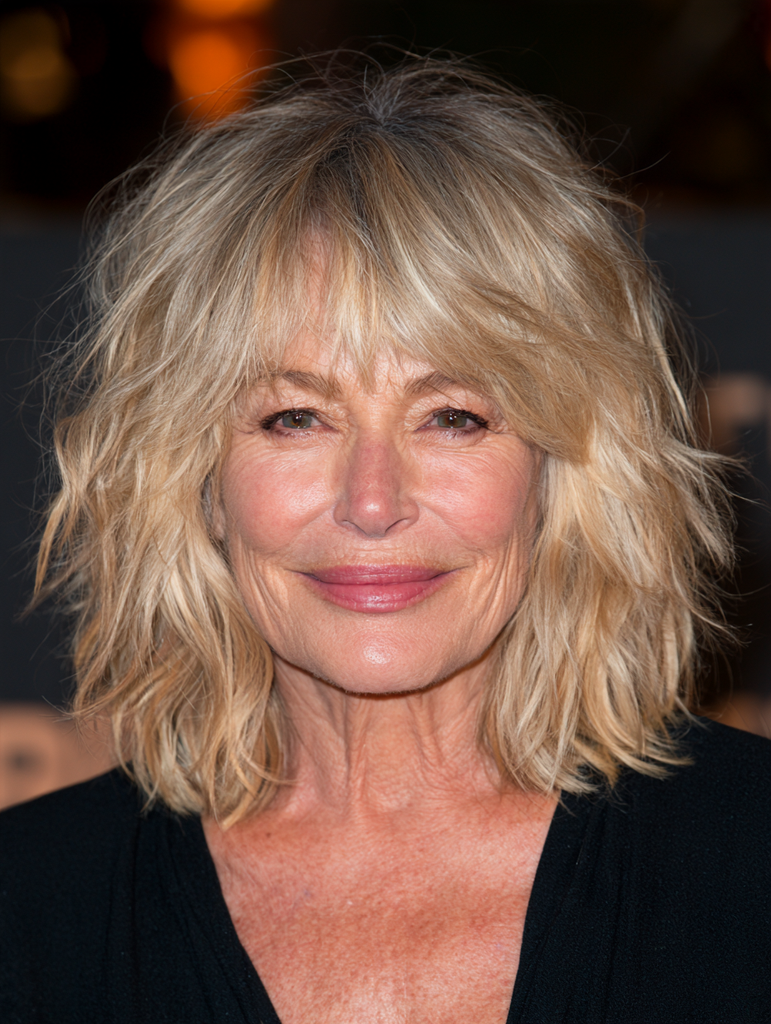
Style the layers with broad bends or allow natural waves to provide texture. Keep the crown relatively controlled so the longer silhouette remains balanced. This length also offers additional versatility for simple ponytails and half-up hairstyles, making it practical for women who prefer adaptable everyday styling.
Airy Shaggy Bob With Bottleneck Bangs
Bottleneck bangs begin slightly shorter through the center and lengthen gradually toward the sides, blending naturally into an airy shaggy bob. Controlled layering removes enough weight from thick hair to create movement while maintaining the density needed for a healthy, substantial silhouette.
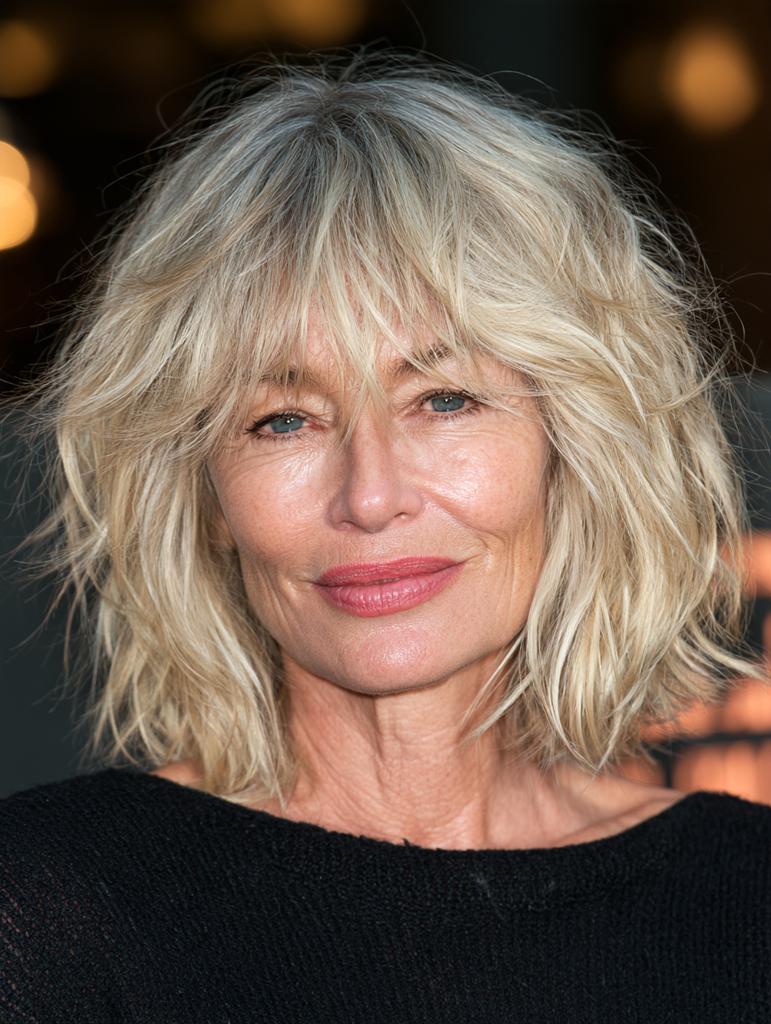
Use a round brush to shape the fringe gently away from the center, then loosen the remaining layers with your fingertips. Avoid overusing texture products because thick strands usually provide sufficient body naturally. This fresh combination creates softness around the face while maintaining lively movement throughout the haircut.
How to Style Shaggy Bob Hairstyles for Thick Hair Over 60
Begin by working with your natural density rather than trying to eliminate it completely. Thick hair often benefits from internal layering, controlled texturizing, and strategic weight removal beneath the surface. Keeping longer outer layers helps preserve a cohesive silhouette while making the haircut easier to manage.
For everyday styling, lightweight smoothing cream, wave-enhancing product, or flexible texture spray is usually sufficient. Natural waves can be encouraged with finger styling, while straighter textures may benefit from a few broad bends. Avoid overloading the roots with product because thick hair generally already has enough structural support.
Final Thoughts
Shaggy bob hairstyles for thick hair over 60 provide an appealing combination of natural fullness and relaxed movement. Wavy versions, feathered shapes, curly bobs, inverted cuts, and shorter bixie-inspired styles each offer different ways to distribute density while maintaining an expressive silhouette.
The ideal shaggy bob should work with your natural texture, preferred maintenance level, and individual features. Thick hair does not need to be aggressively thinned to become manageable. Thoughtful layering can release enough weight while preserving body, giving the finished haircut softness, dimension, and a confidently contemporary character.
