Introduction
Pixie hairstyles for older women over 60 with thick hair can turn natural density into beautifully controlled shape, texture, and movement. Thick hair provides enough body to support everything from softly feathered crops to sculpted pixies with longer fringes. The key is removing weight strategically rather than simply cutting every section extremely short.
Internal layering, tapering around the nape, and keeping purposeful length through the crown can help dense hair avoid a bulky silhouette. Hairstylists also emphasize preserving movement and softness when designing pixies for thick hair. These 13 ideas offer distinctive ways to make thick hair feel lighter, contemporary, and manageable after 60.
The Sculpted Movement That Keeps Pixies Timeless
A well-designed pixie remains appealing because its proportions can be adapted to changing texture and personal style. Thick hair particularly benefits from thoughtful weight removal, since internal layering and tapering can control density while maintaining movement through the top.
That flexibility allows a pixie to look dramatically different without requiring additional length. Longer bangs create softness, choppy layers produce definition, and close sides establish a cleaner silhouette. Recent short-hair trends continue emphasizing airy texture, controlled height, and natural movement, demonstrating how easily the classic pixie can evolve.
Feathered Pixie With Sweeping Bangs
Feathered crown layers can remove heaviness from thick hair while creating graceful movement through the upper sections. Longer sweeping bangs soften the front, giving the haircut an elegant flow without allowing dense strands to form a solid, rounded shape.

Blow-dry the fringe diagonally using a small round brush, then separate selected feathered pieces with your fingertips. Keep the sides relatively controlled so the movement remains concentrated through the top. Lightweight styling cream provides definition without suppressing the natural body that makes thick hair so beautifully responsive.
Tapered Pixie With Long Crown
A tapered pixie gradually shortens around the ears and neckline while preserving generous length through the crown. This contrast controls bulk along the lower sections while allowing thick hair to provide attractive height and movement across the top.

Direct the longer crown backward or toward one side depending on your preferred finish. Avoid applying dense products near the roots because thick hair usually provides enough natural support. Soft tapering around the perimeter keeps the haircut polished while making the fuller upper sections easier to shape.
Textured Pixie With Side Fringe
Strategic texturing can break up excessive density and give thick hair a lighter, more flexible appearance. A side fringe introduces diagonal movement around the forehead, while shorter textured sections throughout the crown create definition without making the haircut appear rigid.

Apply a small amount of flexible styling paste after drying, concentrating only on selected ends. Use your fingers to create separation rather than coating every strand. This approach preserves softness while highlighting the haircut’s layered structure, producing an expressive pixie that transitions easily between casual and polished styling.
Soft Curly Pixie
Naturally curly thick hair can create a beautifully dimensional pixie when enough length remains for the curl pattern to develop. Controlled tapering around the sides and neckline keeps the silhouette balanced, while the fuller crown celebrates natural texture instead of suppressing it.

Apply curl-defining cream to damp hair and allow the upper sections to form naturally. Once dry, gently lift the roots where additional shape is desired. Avoid repeatedly separating curls because maintaining definition helps control expansion. The resulting pixie feels soft, lively, and comfortably sophisticated.
Layered Pixie Bob
A pixie bob provides slightly more length around the temples, ears, and front while retaining a shorter, manageable back. Internal layers can release excess weight from thick hair, allowing the longer sections to move naturally instead of forming a heavy block.

Sweep the front sideways or tuck one section behind the ear for an easy variation. Keep styling products lightweight and concentrate smoothing formulas mainly through the ends. This hybrid shape provides greater versatility than a very short crop while preserving the practical appeal associated with pixie hairstyles.
Choppy Pixie With Wispy Bangs
Choppy layers create deliberate separation throughout dense hair, helping a short pixie appear energetic rather than overly solid. Wispy bangs provide a softer contrast across the forehead, balancing the stronger texture through the crown and sides.

Finger-dry the upper sections in different directions to emphasize their irregular structure. Once dry, define several pieces with lightweight paste instead of heavily sculpting the entire haircut. Thick hair naturally supports the textured shape, so minimal product is usually enough to maintain a lively, dimensional finish throughout the day.
Side-Parted Sculpted Pixie
A defined side part directs thick hair into an intentional shape while providing natural elevation through the heavier section. Keeping the sides carefully tapered prevents excess width, allowing the sculpted crown and sweeping front to become the main focus.

Establish the part while the hair remains damp, then blow-dry the top upward before directing it sideways. A flexible finishing cream can smooth the surface without eliminating movement. This sophisticated pixie works especially well for women who prefer cleaner lines and controlled texture over deliberately tousled styling.
Shaggy Pixie With Tapered Nape
A shaggy pixie introduces irregular crown layers that make thick hair feel lighter and more animated. Tapering the nape creates a neat foundation beneath the textured upper sections, preventing the haircut from becoming excessively bulky as it begins growing between appointments.

Encourage the layers with your fingers during drying rather than forcing them into uniform positions. Apply texture product sparingly through the ends for separation. The contrast between a tidy neckline and relaxed crown creates a contemporary shape that feels playful while remaining comfortable and practical for everyday wear.
Asymmetrical Pixie With Long Fringe
An asymmetrical pixie places noticeably greater length toward one side, transforming thick hair into a dramatic sweeping feature. The shorter opposite side reduces bulk, while the longer fringe creates movement around the forehead and cheekbones without requiring extensive styling.

Blow-dry the fringe diagonally and allow its natural density to create a substantial sweep. The shorter sections can remain smooth for stronger contrast or receive subtle texture for softness. This distinctive pixie provides plenty of personality while keeping dense hair controlled through strategic differences in length.
Salt-and-Pepper Textured Pixie
A textured pixie can beautifully showcase naturally salt-and-pepper hair by allowing different tones to appear throughout separated layers. Controlled weight removal prevents thick strands from sitting too heavily, while crown texture creates movement that highlights the dimensional color pattern.

Style the upper sections with your fingertips and allow several pieces to fall naturally around the forehead. A lightweight finishing product can provide definition without making silver strands appear dull or rigid. This straightforward approach lets natural color and generous density become defining elements of the hairstyle.
Undercut Pixie With Soft Top
A subtle undercut can remove significant bulk beneath extremely thick hair while leaving softer, longer sections visible across the crown. This hidden contrast provides control around the sides and nape without requiring the upper portion to become excessively short.

Wear the top smooth and side-swept for a refined finish or introduce gentle texture for greater movement. Discuss the grow-out with your stylist before choosing a strong undercut, since very short lower sections require regular maintenance. Layered undercuts are commonly used to control heaviness in thick pixies.
Wavy Pixie With Long Top
Keeping extra length through the top allows naturally wavy thick hair to develop visible bends rather than becoming compressed into a short, rounded shape. Closely controlled sides provide contrast, allowing the wave pattern to create attractive movement without overwhelming the silhouette.
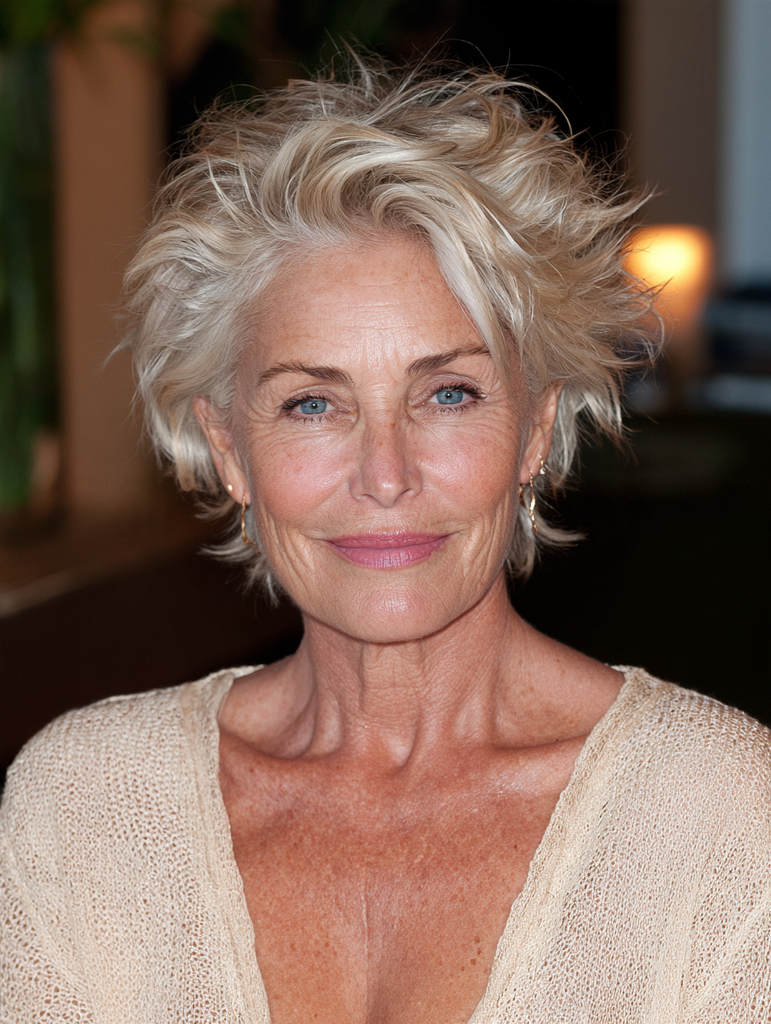
Use lightweight wave-enhancing cream and direct the front slightly sideways while drying. Avoid brushing repeatedly once the waves have formed because excessive manipulation can create unwanted expansion. This softer pixie embraces natural texture while maintaining enough structure to look intentional and polished.
Spiky Pixie With Soft Texture
A softly spiked pixie uses thick hair’s natural strength to create controlled elevation through the crown. Short, strategically placed layers reduce excess density while allowing individual sections to stand away from the scalp, producing an energetic shape without requiring extreme height.
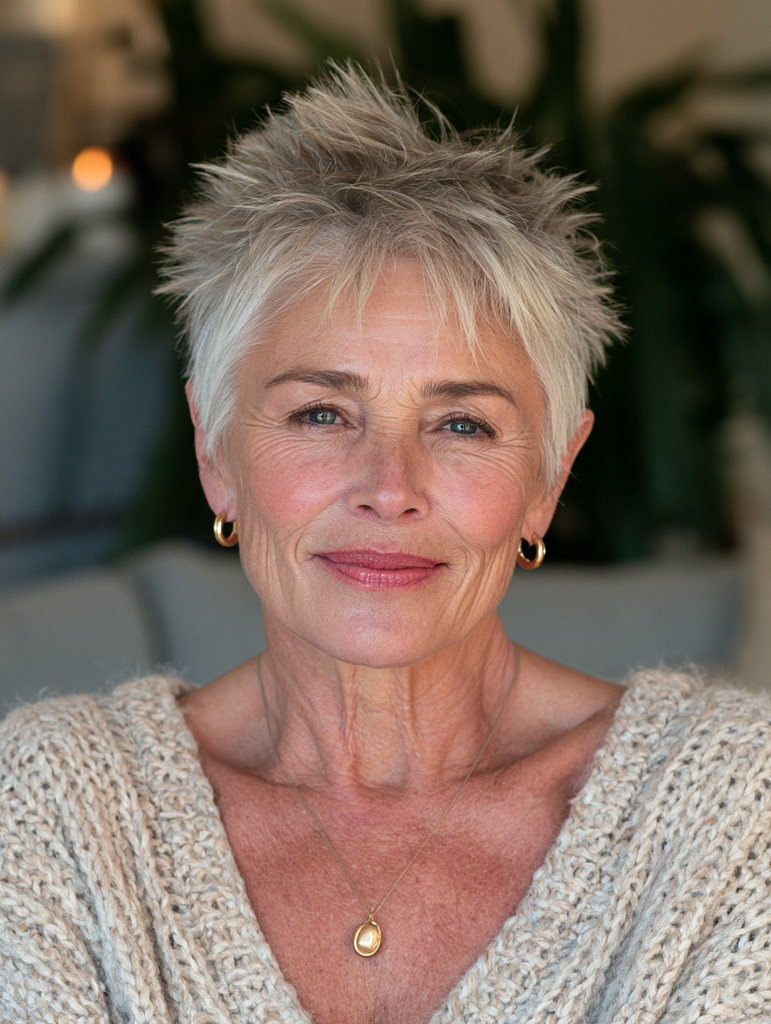
Work a small amount of flexible paste between your fingers before defining selected pieces upward. Keep the sides smoother to prevent the overall silhouette from becoming too wide. Choppy, directional layers are also commonly used in pixies for women over 60 with thick hair.
How to Style Pixie Hairstyles for Older Women Over 60 With Thick Hair
Concentrate on controlling density rather than adding unnecessary volume. Ask your stylist about internal layering, point cutting, or soft tapering where the hair feels particularly heavy. Keeping enough length through the crown is equally important because it provides room for thick straight, wavy, or curly textures to develop natural movement.
At home, begin with small amounts of lightweight product and add more only when necessary. Thick hair can quickly become rigid when overloaded with wax or paste. Finger styling works beautifully for textured finishes, while a small round brush can provide greater control for sweeping fringes and sculpted crown sections.
Final Thoughts
Pixie hairstyles for older women over 60 with thick hair can range from softly feathered and elegant to shaggy, asymmetrical, curly, or boldly textured. Thick density is an advantage when the haircut removes weight intelligently and preserves movement in the areas where it contributes to the overall shape.
Age does not require one particular pixie style. Natural texture, density, face shape, maintenance preferences, and personal taste provide more useful guidance. A personalized consultation is especially valuable with very thick hair because short cuts need deliberate weight distribution to maintain their intended silhouette.
