Introduction
Short hairstyles for thin hair over 50 can create noticeable fullness by reducing excess weight and placing volume where delicate strands need it most. Carefully shaped pixies, structured bobs, bixies, and softly layered crops can make hair appear more substantial while keeping daily styling manageable. Strong perimeters and restrained layering are especially valuable when preserving density matters.
A successful short haircut should also complement your natural texture rather than requiring constant heat styling. Fine straight hair can benefit from blunt edges, while waves and curls often gain dimension from controlled layers. These 13 short hairstyles combine practical shapes with contemporary details, offering women over 50 varied options for achieving movement, softness, and fuller-looking hair.
Why Thoughtful Short Shapes Continue to Work
Short cuts have enduring appeal for thin hair because removing unnecessary length can reduce the weight pulling strands downward. Strategic crown layers can encourage lift, while stronger outlines prevent the ends from appearing unnecessarily sparse. These techniques provide visible structure without depending entirely on styling products.
Their adaptability adds to their longevity. A pixie can become sleek or tousled, while a bob can shift between straight and softly waved finishes. Fringe, parting, and texture can also be updated easily, allowing the haircut to evolve without requiring a completely different style.
Voluminous Tapered Pixie
A tapered pixie keeps the sides and neckline compact while preserving additional length through the crown. This contrast can make thin hair appear fuller on top, creating natural elevation without requiring excessive teasing or complicated styling techniques each morning.

Apply lightweight root mousse before drying the upper sections away from the scalp. Sweep the front slightly sideways for softness and separate several crown pieces with your fingertips. Keeping styling products minimal allows delicate strands to retain movement, resulting in a clean, lively haircut with an easy contemporary finish.
Blunt Jaw-Length Bob
A blunt jaw-length bob concentrates fine strands along one strong baseline, helping the ends appear thicker and more substantial. The compact length also prevents excessive weight from flattening the roots, making this structured shape particularly effective for thin hair.

Blow-dry the roots with gentle elevation while keeping the lengths relatively smooth. The ends can remain straight for a crisp appearance or curve slightly inward for softness. Because the perimeter provides most of the visual density, this bob needs very little layering to maintain its polished, fuller-looking silhouette.
Crown-Lift Layered Pixie
Carefully placed crown layers introduce height and movement without thinning the entire haircut. Keeping the lower sections more compact provides contrast, allowing the elevated top to become the main focal point while giving fine strands a more dimensional appearance.

Use a small round brush or your fingers to lift the crown while blow-drying. A light volumizing spray can provide additional support without creating stiffness. Avoid heavily separating every layer because maintaining some connection between sections helps preserve fullness. The finished pixie feels energetic while remaining refined and practical.
Rounded French Bob
A rounded French bob creates controlled fullness through its softly curved shape, while the shorter length keeps fine strands from becoming weighed down. A light fringe can add personality around the forehead without removing excessive density from the remaining hair.

Encourage subtle curvature with a round brush during drying, keeping the roots gently elevated. The fringe should remain soft and flexible rather than heavily styled. This compact bob can look sophisticated with minimal effort, making it an appealing option for women over 50 who appreciate short hairstyles with classic character.
Textured Bixie With Side Fringe
The bixie combines the movement of a pixie with slightly longer bob-inspired sections around the face. Subtle crown texture provides lift, while a side fringe creates softness without requiring a dense bang section that could reduce fullness elsewhere.

Work lightweight mousse through damp roots and finger-dry the upper layers to encourage natural separation. Sweep the fringe sideways and tuck one longer section behind the ear when desired. This flexible haircut offers several styling possibilities while remaining short enough for a relatively quick everyday routine.
Soft Stacked Bob
Gentle stacking through the back provides built-in support that can make thin hair appear fuller around the crown. Keeping the graduation soft prevents the shape from becoming overly dramatic, while slightly longer front pieces maintain a graceful, balanced silhouette.

Lift the back sections with a small round brush while drying, then smooth the outer layer lightly over the graduated foundation. Avoid aggressive thinning because stronger sections generally create better visual density. Regular trims preserve the stack, helping this bob maintain its volume-enhancing shape with less daily effort.
Feathered Crop With Long Bangs
A feathered crop creates airy movement through the upper sections while longer bangs provide softness and useful styling versatility. Keeping the feathering controlled ensures thin hair retains enough density, especially around the perimeter and front hairline.

Direct the bangs sideways during blow-drying and lift the crown gently with your fingers. Use only a small amount of styling cream to define selected pieces without weighing them down. This short hairstyle feels light and expressive while maintaining a polished shape suitable for both casual and more refined settings.
Short Wavy Bob
Soft waves can create space between fine strands, making a short bob appear naturally fuller and more dimensional. A strong lower perimeter protects density, while minimal layering allows the wave pattern to introduce movement without leaving the ends noticeably sparse.

Apply lightweight mousse and encourage natural waves while drying, or create several broad bends with minimal heat. Avoid making every wave identical because slight variation produces a more relaxed finish. This hairstyle provides texture and body while remaining manageable enough for straightforward everyday styling.
Side-Parted Pixie Bob
A side part creates immediate root lift by shifting thin strands away from their usual position. Combined with the longer front sections of a pixie bob, this simple detail introduces volume, asymmetry, and flattering movement without requiring extensive layers throughout the haircut.

Create the part while the hair is damp and dry the heavier side upward before directing it naturally across the forehead. Keep the back softly shaped and relatively compact. This practical hairstyle offers a fuller-looking crown while preserving enough front length for tucking, sweeping, or gentle tousling.
Short Shaggy Bob
A short shaggy bob combines subtle crown layers with a stronger lower outline, creating movement without sacrificing too much density. The slightly irregular texture prevents thin hair from appearing rigid, while the compact length encourages natural root lift and manageable volume.

Finger-dry the crown with lightweight mousse, allowing selected layers to fall naturally instead of carefully positioning every section. Gentle bends can provide additional dimension when desired. Keeping the ends reasonably substantial ensures the haircut looks intentionally textured rather than overly feathered, producing a relaxed and contemporary finish.
Curly Tapered Pixie
A curly tapered pixie allows natural texture to provide much of the hairstyle’s volume. Shorter sides maintain definition, while additional length through the crown gives curls enough room to form, creating attractive height and dimension for thinner hair.
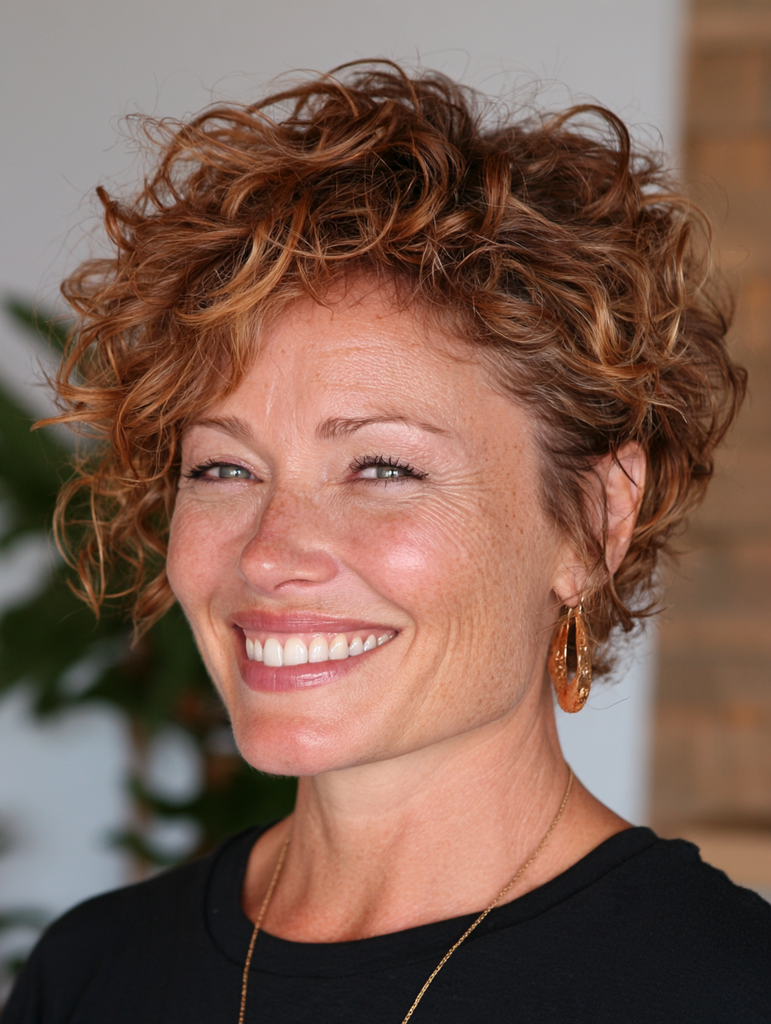
Apply a lightweight curl-defining product while damp and avoid heavily coating the roots. Once dry, gently lift the crown with your fingertips instead of separating every curl. The combination of controlled tapering and flexible texture creates an expressive short hairstyle that can remain practical between regular shaping appointments.
Inverted Bob With Full Ends
An inverted bob creates natural structure by keeping the back shorter and gradually extending the front sections. Gentle graduation can provide crown lift, while maintaining substantial ends prevents thin hair from looking excessively wispy around the face.

Blow-dry the back with light elevation before smoothing the longer front pieces downward. Keep layering restrained so the outer silhouette remains strong and polished. This architectural shape offers visible dimension without relying on dramatic texture, making it especially suitable for women who prefer cleaner, more structured short hairstyles.
Wispy Pixie With Sweeping Fringe
A wispy pixie uses delicate surface texture to create movement while preserving enough underlying density for a balanced silhouette. A sweeping fringe introduces softness around the forehead and provides styling flexibility, while shorter sides keep the overall shape neat.
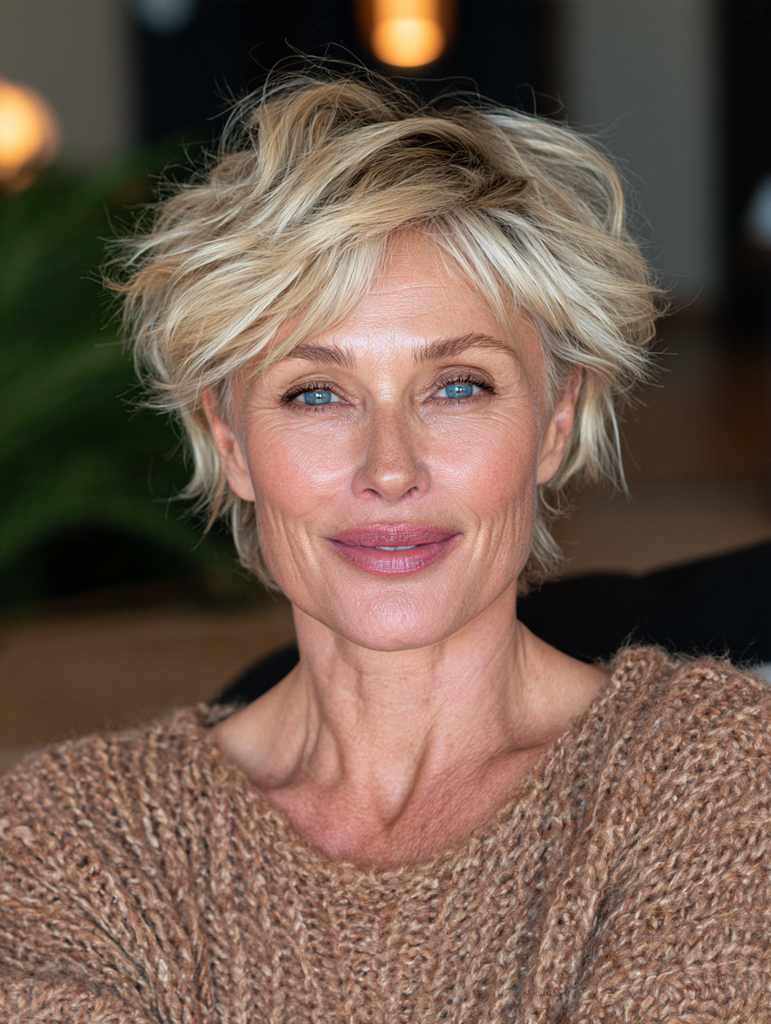
Lift the upper sections gently during drying, then direct the fringe diagonally across the forehead. Use a tiny amount of lightweight paste to define only selected ends. Keeping the texture subtle prevents fine strands from becoming overly separated, allowing this pixie to remain soft, dimensional, and naturally polished.
How to Style Short Hairstyles for Thin Hair Over 50
Begin with lightweight volumizing products rather than dense creams or oils that can quickly flatten fine strands. Root mousse, volumizing spray, and gentle blow-drying against the natural growth direction can provide useful elevation. Changing the part can also create immediate lift without adding another styling step.
Avoid excessive thinning when density is already limited. Stronger perimeters, restrained layers, and controlled crown texture generally create a fuller appearance. When adding waves, use broader bends instead of tightly separating every section. Regular trims also help short hairstyles retain their intended structure and prevent delicate ends from becoming visibly sparse.
Final Thoughts
Short hairstyles for thin hair over 50 offer plenty of possibilities beyond one traditional haircut. Tapered pixies, blunt bobs, textured bixies, stacked shapes, curly crops, and softly shaggy styles can each create fullness differently while keeping maintenance relatively straightforward.
Focus on a haircut that preserves density while introducing movement where your hair naturally needs it. Texture, face shape, lifestyle, and styling preferences should guide the final choice more than age alone. With intelligent shaping and lightweight styling, short thin hair can feel fresh, dimensional, manageable, and confidently contemporary.
