Introduction
Hairstyles for thin hair over 50 can make delicate strands appear fuller by combining thoughtful length, strategic layering, strong ends, and lightweight movement. Hair density and texture can change over time, but that does not limit stylish options. Short pixies, structured bobs, shoulder-length cuts, and softly layered styles can all create attractive dimension when designed around the hair’s natural characteristics.
The most effective approach usually avoids removing unnecessary density. Blunt perimeters can strengthen thin ends, subtle crown layers provide lift, and carefully positioned waves create visual body. Bangs can also refresh the face when their density suits the available hair. These 13 hairstyles offer practical, contemporary inspiration for women over 50 seeking volume without complicated maintenance.
The Smart Volume Principles That Give These Cuts Longevity
Volume-enhancing hairstyles stay relevant because they work with fundamental principles rather than short-lived trends. Removing excessive length can reduce downward weight, while strong perimeters make delicate ends appear more substantial. Controlled layers introduce movement without unnecessarily thinning the overall silhouette.
These techniques are also highly adaptable as texture and styling preferences change. A bob can become softer with waves, a pixie can gain longer fringe, and medium hair can receive subtle face-framing pieces. That flexibility allows women over 50 to maintain a recognizable personal style while refreshing its shape whenever desired.
Blunt Chin-Length Bob
A blunt chin-length bob concentrates thin strands into a compact perimeter, creating the visual impression of stronger, denser ends. Minimal layering protects valuable fullness, while the shorter length reduces some of the weight that can cause delicate hair to appear flat.

Blow-dry the roots with gentle elevation before smoothing the lengths toward the jaw. Keep the ends straight or softly curved rather than heavily feathered. Lightweight volumizing mousse can provide additional body without separating the strong baseline, making this polished bob particularly practical for straightforward everyday styling.
Layered Pixie With Crown Lift
Short blended layers can give a pixie natural movement while preserving enough length through the crown for visible elevation. Keeping the sides controlled directs attention upward, helping thin hair appear more dimensional without relying on excessive teasing or heavy styling products.

Apply lightweight root spray before blow-drying the upper sections away from the scalp. Separate several layers gently with your fingertips for natural texture. Avoid coating every piece with wax because fine strands can quickly become heavy. This practical pixie combines easy maintenance with a lively, contemporary silhouette.
Stacked Bob With Soft Graduation
Gentle graduation through the back provides built-in support, helping a stacked bob develop natural crown volume. Keeping the outer layers relatively substantial prevents thin hair from appearing overly feathered, while slightly longer front sections create a polished and balanced overall shape.

Use a small round brush beneath the graduated layers during blow-drying to reinforce their lift. Smooth the upper sections lightly over the stack without flattening them. Regular trims help maintain the graduation, ensuring the hairstyle continues producing visible body instead of gradually losing its structured, volume-enhancing silhouette.
Side-Parted Lob With Full Ends
A longer bob provides extra styling flexibility while a side part creates immediate lift by shifting strands against their usual direction. Maintaining a strong lower perimeter makes thin ends appear fuller, preventing the longer length from looking unnecessarily sparse or fragile.

Establish the part while the hair remains damp, then blow-dry the heavier side upward before directing it naturally downward. Gentle bends through the lower lengths can provide additional dimension. This sophisticated lob works particularly well for women who prefer medium hair but still want a noticeable volume boost.
Feathered Pixie Bob
A pixie bob combines compact length with softly feathered upper layers that create movement around the crown and sides. Longer front pieces preserve visual density and provide face-framing flexibility, while the shorter back keeps the overall hairstyle light and naturally elevated.

Direct the crown upward with a small round brush, then sweep the front pieces gently sideways. Keep feathering controlled because excessive thinning can reduce valuable density. This hybrid haircut offers the convenience of shorter hair while maintaining enough length to experiment with smooth, tousled, or softly curved finishes.
Wavy Bob With Side Bangs
Loose waves create dimension between thin strands, helping a bob appear fuller without requiring extensive layering. Side bangs add movement around the forehead while using less hair than a heavy fringe, allowing more density to remain throughout the main haircut.

Create broad alternating bends through the middle lengths, leaving selected ends relatively straight for a relaxed finish. Direct the fringe sideways with gentle root lift. A small amount of texture spray can provide grip, although using too much may quickly weigh down delicate hair and reduce natural movement.
Rounded Bob With Wispy Fringe
A softly rounded bob creates controlled fullness through the sides and back while maintaining a substantial outer perimeter. Wispy fringe introduces light face framing without requiring a deep bang section, making it particularly useful when density around the hairline is limited.

Use a round brush to encourage subtle curvature through the lengths while lifting the roots gently. Keep the fringe separated rather than styling it into a thick horizontal section. This balanced haircut feels polished and feminine while providing enough movement to prevent thin hair from appearing overly flat.
Textured Bixie With Long Bangs
The bixie blends pixie layering with bob-inspired length, creating a lightweight shape that can give thin hair noticeable movement. Longer bangs provide styling versatility around the face, while shorter crown sections encourage natural elevation without demanding aggressive layering throughout the haircut.

Apply volumizing mousse near the roots and blow-dry the crown with gentle lift. Sweep the longer fringe sideways or slightly away from the face. Separating only selected sections maintains visual density while creating texture, resulting in a fresh short hairstyle that remains flexible and easy to personalize.
Shoulder-Length Cut With Subtle Layers
Shoulder-length hair can remain flattering for thin strands when the perimeter stays relatively strong and layering is carefully restrained. Subtle internal layers introduce movement without creating sparse ends, while the versatile length allows numerous styling options for women who prefer keeping more hair.

Add gentle root elevation during blow-drying and create broad bends through the lower sections when additional fullness is desired. Avoid heavily feathering the perimeter because solid ends generally appear denser. This understated haircut offers a comfortable balance between manageable length, movement, and visual thickness.
Short Shag With Soft Fringe
A short shag introduces crown movement and airy texture through carefully distributed layers. Soft fringe adds character around the forehead, while keeping the lower sections sufficiently substantial prevents thin hair from becoming excessively wispy or disconnected throughout the ends.

Work lightweight mousse through damp strands, then dry with gentle root lift rather than forcing every layer into position. Use your fingers to separate selected sections after drying. The resulting hairstyle feels relaxed and energetic, making it particularly appealing for women over 50 who prefer less structured finishes.
Inverted Bob With Crown Volume
An inverted bob gradually moves from shorter back sections toward longer front pieces, creating dimension without sacrificing valuable density around the face. Controlled graduation supports the crown naturally, helping thin hair develop visible shape while maintaining a sleek and polished silhouette.
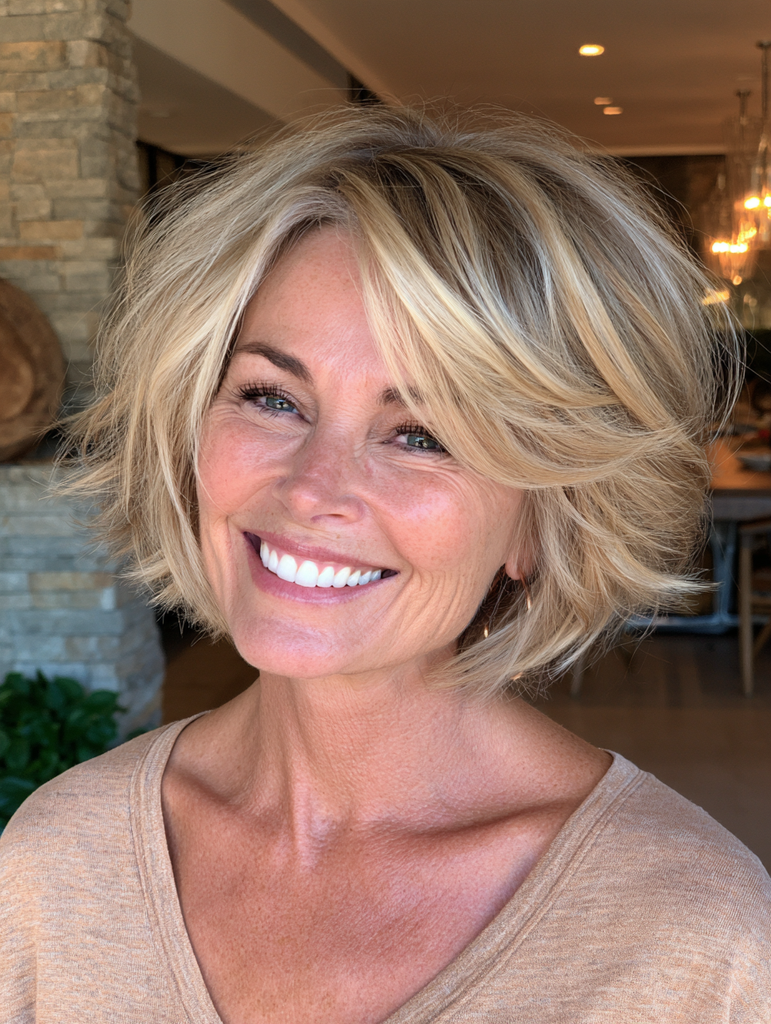
Lift the back gently during blow-drying, then smooth the front sections downward to emphasize their longer line. Avoid excessive thinning around the perimeter because stronger ends enhance fullness. This structured bob offers a sophisticated appearance while keeping everyday styling relatively efficient and manageable.
Curly Bob With Light Layers
Natural curls or softly styled curls can make thin hair appear more dimensional by creating space and movement throughout a bob. Light layering helps distribute the texture evenly without removing excessive density, allowing the hairstyle to maintain a balanced and substantial-looking silhouette.
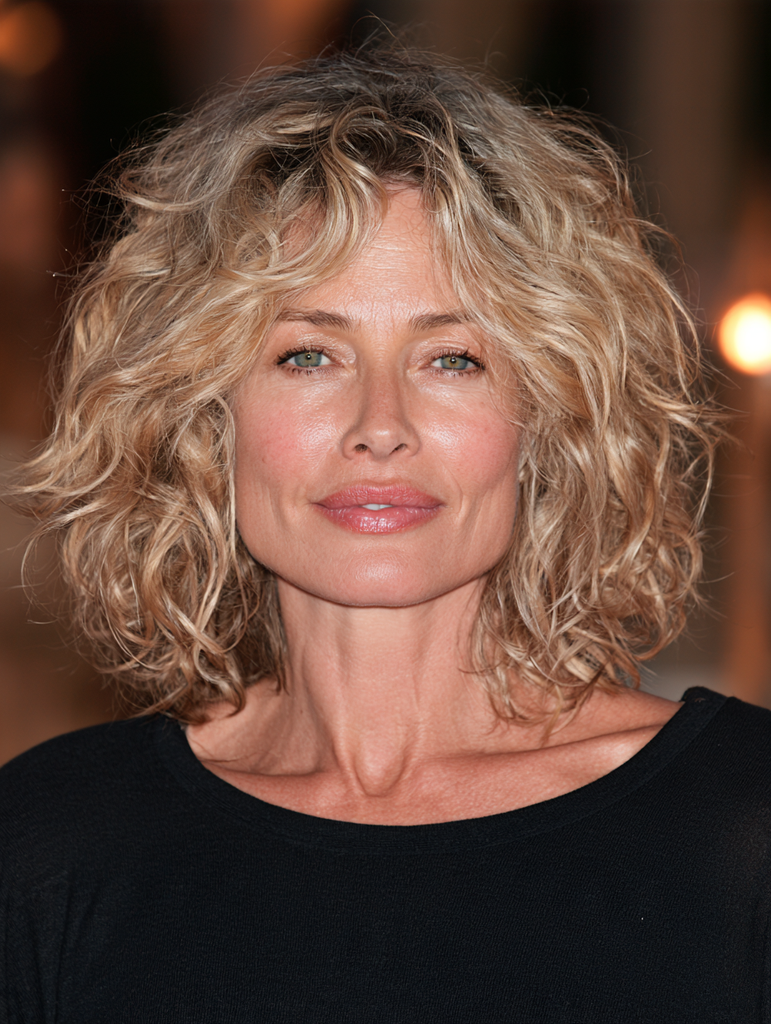
Use lightweight curl-defining product and avoid coating the roots heavily. Once dry, gently lift the crown with your fingertips where additional volume is needed. Keeping curls flexible rather than stiff allows them to move naturally, creating a soft, expressive bob that feels fresh and comfortably wearable.
Collarbone Cut With Face-Framing Layers
A collarbone-length haircut provides enough length for versatility while remaining manageable for thinner strands. Gentle face-framing layers create movement around the cheekbones and jaw, while a stronger lower perimeter helps maintain the appearance of density throughout the longer sections.
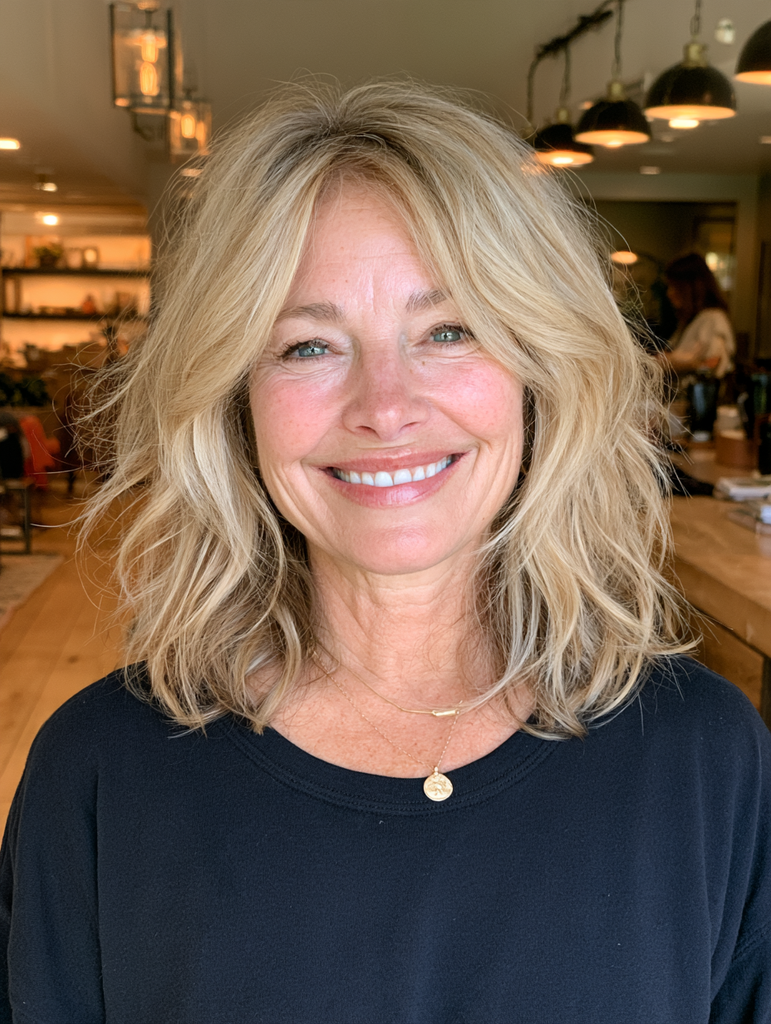
Style the front layers slightly away from the face using a round brush, then keep the remaining lengths smooth or softly waved. Lightweight root products can provide subtle elevation without adding stiffness. This elegant option suits women who want fuller-looking hair without transitioning into a dramatically shorter haircut.
How to Style Hairstyles for Thin Hair Over 50
Start with lightweight products designed to support volume without coating delicate strands. Root-lifting mousse or spray can provide useful elevation, while blow-drying sections against their natural direction creates temporary fullness. Broad waves, side parts, and controlled crown lift can further enhance dimension without requiring aggressive teasing.
Avoid over-layering when preserving density is important, particularly through naturally sparse ends. Heavy oils and dense styling creams can also reduce movement quickly. Regular trims help maintain stronger perimeters, while changing the part occasionally can provide an easy root lift without altering the haircut itself.
Final Thoughts
Hairstyles for thin hair over 50 can create impressive fullness when the haircut works intelligently with natural density. Blunt bobs, stacked shapes, layered pixies, textured bixies, and restrained medium layers each provide different ways to introduce volume while keeping delicate strands manageable.
Rather than choosing a hairstyle based only on age, consider your density, texture, face shape, and preferred styling routine. The strongest option is one that preserves enough weight while placing movement strategically. With thoughtful shaping and lightweight styling, thin hair can appear polished, dimensional, lively, and beautifully contemporary.
