Introduction
Short stacked bob haircuts for thin hair are especially useful when delicate strands need more visible body, shape, and movement. Their defining feature is graduated layering through the back, where shorter sections support longer pieces above them and create natural-looking elevation. A stronger perimeter and thoughtfully controlled layering can make thin hair appear fuller without requiring excessive teasing or heavy styling products.
Stacked bobs are also remarkably versatile. The graduation can remain soft and subtle for an understated appearance or become more pronounced for dramatic volume and definition. Front sections may stay blunt, angled, wavy, or softly layered depending on personal preference. These 13 ideas explore distinctive stacked shapes that combine manageable short lengths with flattering fullness.
The Volume-Building Design That Keeps Stacked Bobs Timeless
Stacked bobs continue attracting attention because their underlying structure naturally supports volume. Graduated back layers reduce excess weight while encouraging the crown to appear lifted, making the technique particularly beneficial for thin hair. Maintaining enough density through the outer perimeter keeps the style from looking sparse.
Their customizable structure also contributes to long-term popularity. Changing the front length, parting, texture, or degree of graduation can transform the haircut without abandoning its recognizable stacked foundation. This flexibility allows women to adapt the bob to changing preferences while retaining its practical, body-enhancing advantages.
Classic Short Stacked Bob
Carefully graduated back layers give the classic stacked bob its recognizable rounded shape and naturally elevated crown. Keeping the outer sections relatively substantial prevents thin hair from appearing overly feathered, while the shorter nape provides a neat foundation for visible volume.

During blow-drying, lift each graduated section gently with a small round brush rather than aggressively teasing the roots. Smooth the upper layers over the stack to maintain a polished outline. Lightweight volumizing mousse provides additional support without making delicate strands stiff or noticeably separated.
Angled Stacked Bob
Longer front pieces combined with a graduated back create an angled silhouette that gives thin hair both movement and structure. The stacked crown introduces fullness, while the extended sides maintain valuable density and prevent the haircut from appearing excessively short or sparse.

Use a round brush to reinforce elevation through the back before smoothing the front sections downward. Keeping the ends relatively strong helps emphasize the clean angle and fuller appearance. This combination feels sophisticated and contemporary while providing enough shape to make delicate strands look noticeably more substantial.
Stacked Bob With Side Bangs
Soft side bangs introduce diagonal movement while graduated back layers create the volume associated with a stacked bob. Keeping the fringe relatively light prevents too much hair from being removed from the main shape, helping thin strands maintain valuable density.

Blow-dry the bangs sideways with gentle root elevation, then lift the stacked sections using a small round brush. Avoid heavy styling creams that can quickly flatten delicate hair. This balanced combination offers face-framing softness while preserving the elevated, fuller-looking silhouette that makes stacked bobs especially appealing.
Rounded Stacked Bob
A rounded stacked bob uses gentle graduation to create controlled fullness throughout the back and sides. Substantial outer layers preserve visual density, while shorter sections underneath provide natural support. The curved silhouette gives thin hair a softer, more polished appearance.

Style the haircut with a round brush, lifting the roots before encouraging subtle inward movement through the ends. Keep the crown airy rather than tightly sculpted so the volume appears natural. Regular shaping helps preserve the rounded outline and prevents overgrown layers from gradually pulling the hairstyle downward.
Textured Stacked Bob
Light texture gives a stacked bob additional dimension without requiring excessive layering through already thin strands. The graduated back provides underlying volume, while softly separated surface pieces create movement and prevent the hairstyle from appearing too smooth or uniform.

Apply lightweight mousse before drying, concentrating lift around the crown. Once the hair is dry, separate selected upper pieces with your fingertips rather than disturbing the entire perimeter. This controlled texture maintains fullness through the ends while giving the short stacked shape a relaxed, modern personality.
Inverted Stacked Bob
Pronounced graduation through the back transitions into noticeably longer front sections, creating the dramatic silhouette of an inverted stacked bob. This structure naturally builds crown volume while allowing thin hair to retain substantial-looking length and density around the face.

Elevate the back sections during blow-drying, then smooth the longer front pieces for a clean contrast. Avoid excessive thinning through the ends because their strength contributes significantly to the fuller appearance. This polished variation works particularly well for women wanting noticeable shape without depending on complicated everyday styling.
Short Stacked Bob With Wispy Bangs
Wispy bangs bring softness to a structured stacked bob without requiring a large section of fine hair. The graduated back provides natural elevation, while a stronger perimeter ensures the remaining strands continue looking substantial. Airy fringe also keeps the overall shape from feeling heavy.

Keep the bangs gently separated during styling and avoid applying dense products directly to them. Lift the crown with a round brush while smoothing the outer layers over the stack. The resulting haircut feels feminine and light while maintaining the body thin hair often needs.
Wavy Stacked Bob
Loose waves introduce visual dimension through a stacked bob while the graduated foundation maintains natural crown lift. Keeping the waves broad and relaxed prevents fine strands from appearing overly separated, and a substantial perimeter protects the appearance of density through the ends.

Create gentle alternating bends after establishing root volume, concentrating texture through the middle and upper lengths. Avoid tightly curling every section because excessive separation can reveal sparse areas. A small amount of texture spray adds movement while allowing the stacked shape to remain soft, touchable, and full.
Side-Parted Stacked Bob
A deep side part adds immediate root elevation to the volume already created by stacked back layers. Moving thin hair against its usual direction makes the crown appear fuller, while the asymmetrical front introduces natural movement without requiring additional layering.

Establish the part before blow-drying, then lift the heavier section away from the scalp. Smooth the lower perimeter to preserve visible density while keeping the crown gently elevated. This simple styling adjustment makes a classic stacked bob feel fresher and can noticeably improve the appearance of body.
Choppy Stacked Bob
Controlled choppy layers give a stacked bob playful texture while preserving enough weight to keep thin hair looking full. Shorter back sections support the crown, and lightly irregular surface pieces prevent the haircut from appearing overly rounded or traditionally polished.

Use volumizing mousse at the roots before blow-drying with gentle elevation. Once dry, separate several choppy sections with minimal styling paste, avoiding the dense lower perimeter. This technique creates movement without sacrificing thickness, resulting in a short bob that feels energetic, dimensional, and easy to personalize.
Stacked Bob With Long Front Layers
Longer face-framing pieces provide graceful contrast against the compact graduation of a stacked back. Preserving length through the front also helps thin hair maintain visual density, while shorter crown layers deliver the lift and shape associated with this distinctive bob.
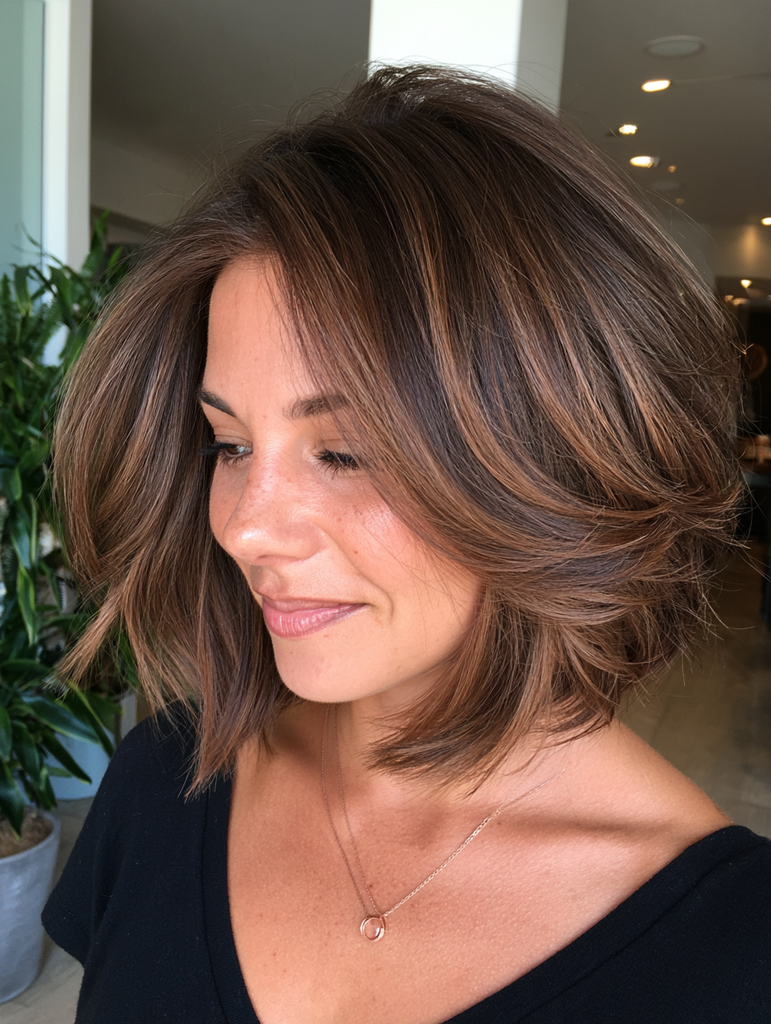
Style the back with controlled elevation before directing the front layers smoothly downward or slightly away from the face. Keep heavy products away from the roots to preserve natural movement. This variation provides short-hair convenience while maintaining enough front length for versatile styling and softer framing.
Sleek Stacked Bob
Smooth styling emphasizes the carefully graduated structure of a stacked bob while allowing its elevated back to remain clearly visible. A clean outer layer makes thin hair appear more unified and substantial, particularly when the perimeter is kept relatively strong and precise.
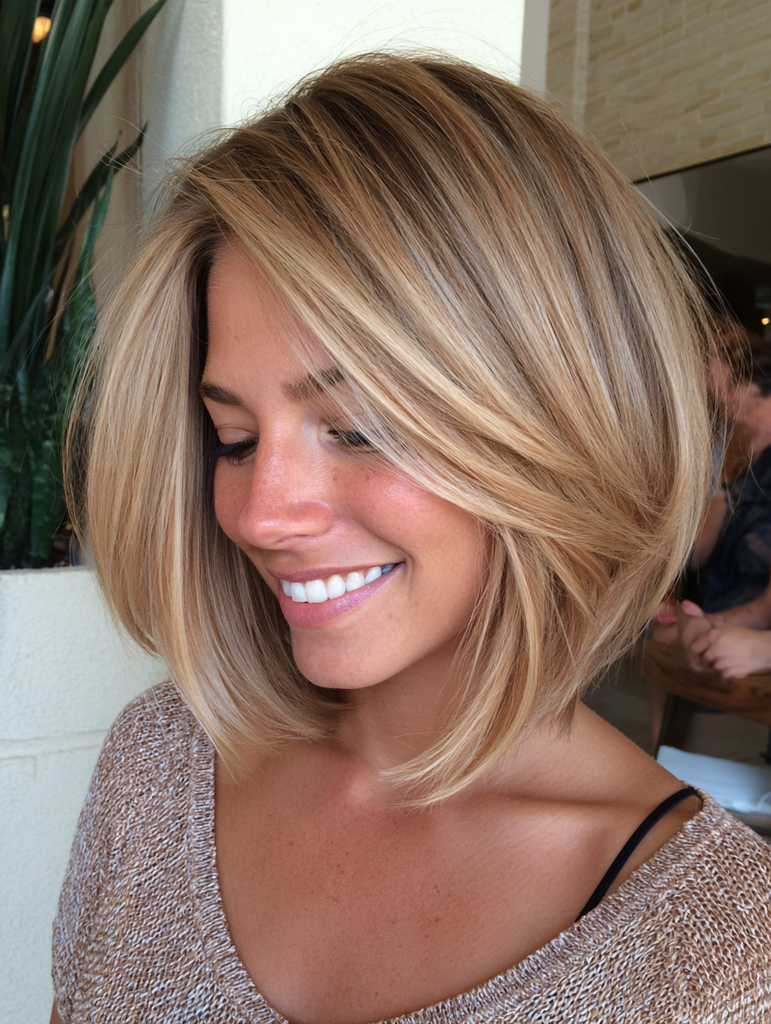
Blow-dry the hair with root lift before smoothing each section over the graduated foundation. Use only a restrained amount of lightweight finishing product to enhance shine without collapsing volume. The result feels sophisticated and refined while preserving the body created by the haircut’s underlying stacked construction.
Stacked Bixie Bob
Combining stacked bob graduation with pixie-inspired short layers creates a lightweight haircut that offers noticeable crown movement. The back remains compact and elevated, while slightly longer front pieces preserve softness and help fine strands avoid looking excessively cropped.
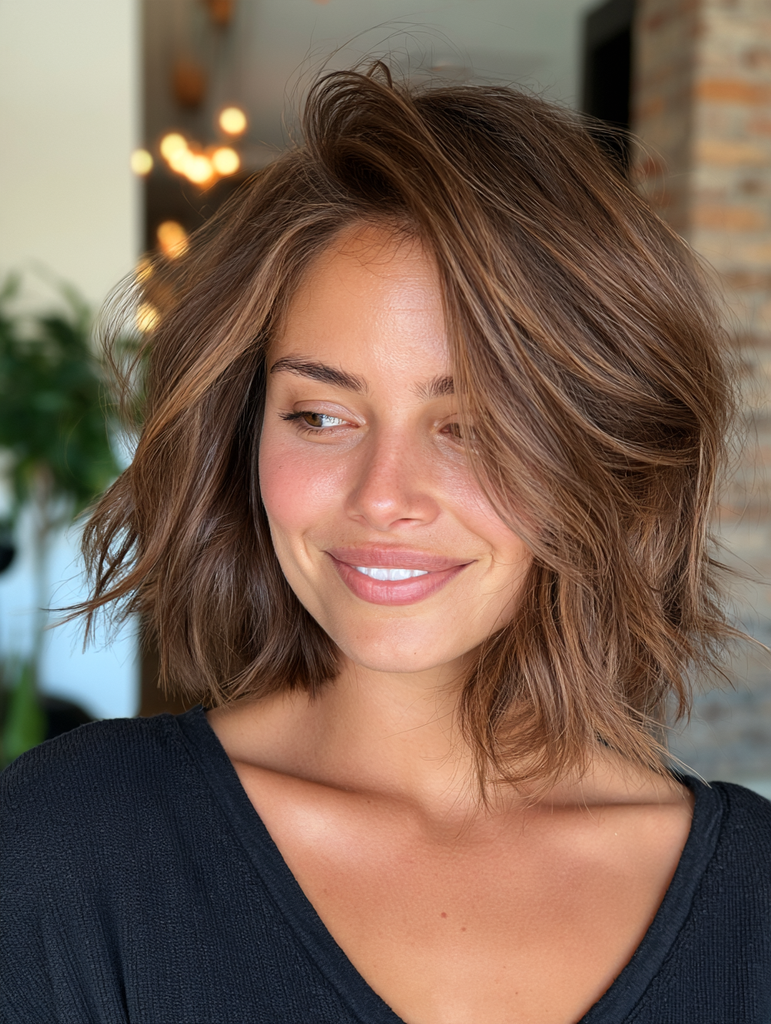
Lift the crown using a small round brush, then separate selected upper sections with your fingertips for gentle texture. Keeping the perimeter controlled prevents the style from becoming too wispy. This hybrid shape works beautifully for women wanting something shorter and livelier than a traditional stacked bob.
How to Style Short Stacked Bob Haircuts for Thin Hair
Begin by applying a lightweight root-lifting mousse or spray before blow-drying. Use a small round brush beneath the graduated back sections, lifting them away from the scalp so the stacked construction can naturally support the crown. Smooth the outermost layers gently rather than flattening the entire haircut.
Thin hair can lose volume quickly when overloaded with oils, waxes, or dense creams, so keep finishing products minimal. Texture spray can add grip when used sparingly, while strategic side parts create additional elevation. Regular trims are particularly important because overgrown graduation can weaken the stacked silhouette and reduce its volume-enhancing effect.
Final Thoughts
Short stacked bob haircuts for thin hair combine strategic graduation with compact lengths to create shape, movement, and the appearance of greater fullness. Strong perimeters, controlled crown layers, longer front sections, and lightweight texture can all enhance delicate strands without requiring aggressive styling.
The ideal stack should match your density and preferred maintenance level. A subtle rounded bob offers understated volume, while an inverted or choppy variation creates stronger definition. Whichever shape you choose, preserving enough weight through the outer layers helps ensure the haircut remains substantial, balanced, and beautifully dimensional.
